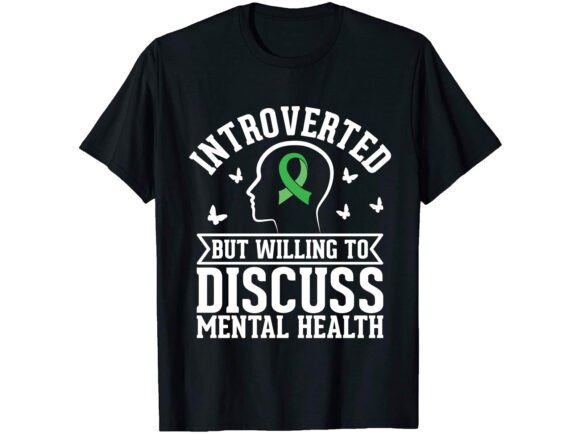
Mental Health Awareness T-Shirt
As a designer who spends half my life staring at digitized files and the other half watching them stitch out on the hoop, I approach every new asset with a mix of optimism and skepticism. The market is flooded with "awareness" graphics, many of which look generic or lose their impact when translated into thread. However, evaluating the Mental Health Awareness T-Shirt design file offers a refreshing perspective on how digital art can successfully transition into tangible, wearable empathy. This review isn't just about whether it looks good on a screen; it is about how it performs as a machine embroidery design in real-world applications, from small batch Etsy shops to personalized client gifts.
First Impressions and Visual Mood
The immediate visual personality of this T-Shirt Designs category entry is one of calm clarity. In a niche often dominated by bold slogans or chaotic abstract shapes, this design feels intentional. It carries a weight that suggests care rather than just decoration. When you first load the embroidery file, the layout appears balanced, avoiding the common pitfall of overcrowding the negative space. For an embroidery project focused on mental health, this subtlety is crucial. It allows the message to resonate without shouting, making it suitable for a wider demographic, including those who might be sensitive to loud visual stimuli.
The shape and detail level suggest a design that relies on clean lines and perhaps soft curves, which translates beautifully to satin stitches or precise fill stitches. It doesn’t scream for attention but rather invites the viewer to pause. This makes it an excellent candidate for handmade product lines where the goal is to create a sense of connection and support through texture and craftsmanship. The graphic nature of the source implies it will hold up well as a digital product seller asset, providing a clear silhouette that remains recognizable even when scaled down for smaller items like mug labels or sticker sheets.
Real-World Application: From Screen to Stitch
Let’s imagine a practical scenario. You are preparing a collection for a local craft fair or updating your online boutique. You decide to create a line of custom apparel focused on self-care and wellness. You choose this design for a heavyweight cotton hoodie and a canvas tote bag. Here is how the design behaves in these contexts.
On a sweatshirt embroidery project, the design likely sits comfortably in the center chest or over the heart area. The contrast between the soft fabric nap and the smooth threads creates a premium feel. Customers appreciate the tactile quality of embroidery over print because it signifies durability and effort. When used on a tote bag design, the graphic element adds a professional touch to what could otherwise be a plain accessory. It transforms a simple shopping bag into a statement piece that promotes awareness while being functional. The versatility mentioned in the product description—suitable for stickers, posters, and banners—hints at a scalable vector-like quality that maintains its integrity across different mediums.
Furthermore, this design fits seamlessly into the realm of personalized gift markets. Imagine a mother ordering a custom baby onesie for a friend going through a difficult time. A subtle, embroidered symbol of mental health awareness on a baby embroidery item conveys deep thoughtfulness. It is gentle, protective, and supportive. Similarly, for holiday embroidery collections, this design can serve as a meaningful alternative to traditional festive motifs, offering a way to acknowledge the complexities of the season with grace.
Where Caution Is Required
While the design has strong potential, no embroidery project is without its technical challenges. As a reviewer, I must highlight areas where designers need to exercise caution. If you plan to use this design on dark fabric, you will need to ensure the thread colors provide sufficient contrast. Dark backgrounds can swallow up lighter shades, so testing your thread colors against the final garment material is non-negotiable.
Additionally, consider the hoop size. If the design includes intricate details or tiny lettering, attempting to stitch it on a curved surface like a embroidered patch or a cap brim might result in distortion. Textured fabrics, such as heavy denim or fleece, can also hide fine details. In these cases, the design may lose some of its intended clarity. It is also vital to inspect the design for dense stitch areas. If the digitization is too heavy, it could cause puckering, especially on thin or stretchy fabrics. Always test on scrap fabric first to evaluate how the stabilizer interacts with the base material.
Impact on Brand and Customer Trust
For Etsy sellers and small shop product creators, the presentation of your work directly influences buyer engagement. A well-executed embroidery project signals professionalism. When customers see that you have taken the time to produce a high-quality finished product, they are more likely to trust your brand consistency. The Mental Health Awareness T-Shirt design, with its thoughtful aesthetic, helps elevate your brand above mass-produced, low-effort merchandise.
This design also enhances the perceived value of your items. Embroidery inherently adds a layer of luxury and permanence compared to heat transfers or vinyl. By using a design that resonates emotionally, you are not just selling a shirt; you are selling a sentiment. This emotional connection drives word-of-mouth marketing and encourages repeat business. Whether you are creating commercial embroidery assets or unique craft business items, the ability to convey empathy through thread is a powerful tool.
Practical Designer Notes
Before committing to a full production run, I recommend following these steps to ensure success:
- Test on Scrap Fabric: Always stitch out the design on the exact type of fabric you intend to use. This reveals issues with tension, density, or color clash that mockups cannot show.
- Check Stitch Density: Review the digitization for overly dense areas that might cause needle breakage or fabric distortion. Adjust if necessary to ensure longevity.
- Verify Licensing: Confirm whether the digital embroidery file allows for commercial use. Selling finished items requires specific rights that differ from personal use licenses.
- Use Proper Stabilizer: The right stabilizer is key to preventing puckering, especially on knit fabrics commonly used for custom apparel.
- Mockup in Black and White: Convert your design preview to grayscale to check contrast levels. This ensures readability regardless of the thread colors chosen.
- Inspect Small Details: Zoom in on the file to ensure that any fine lines or text are large enough to be stitched clearly without becoming muddy blobs.
In conclusion, the Mental Health Awareness T-Shirt design is a versatile and emotionally resonant addition to any embroiderer’s library. It bridges the gap between digital graphic design and physical textile art effectively. By paying attention to technical details like fabric choice and stabilizer use, you can transform this Graphics asset into a meaningful, high-quality product that stands out in the crowded handmade marketplace. It is a testament to the power of thoughtful design in creating products that matter.