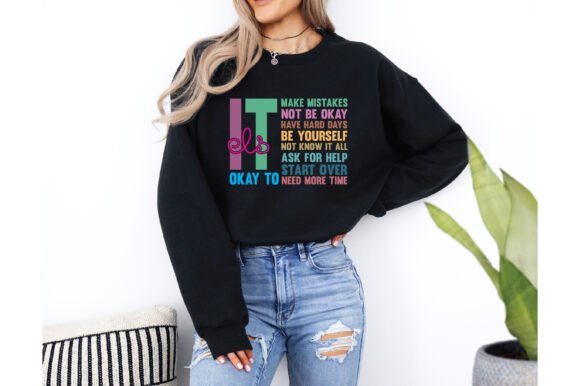
It s Okay to Make Some Mistakes Shirt: A Designer’s Review
As a designer who spends more time staring at stitch density charts and testing stabilizers than actually drinking coffee, I have developed a certain skepticism toward digital downloads. We are all bombarded with thousands of Graphics and T-Shirt Designs every week, promising perfection but often delivering tangled messes or designs that simply do not translate well from screen to fabric. That is why I approach every new file with a critical eye, asking the same question before I commit it to my hoop: Does this design hold up in the real world?
Recently, I pulled down a file titled "It s Okay to Make Some Mistakes Shirt" to test its viability for a specific client project. The premise was simple: create a comforting, relatable piece of custom apparel for a local boutique looking to launch a line of supportive, mental-health-aware merchandise. This review breaks down exactly how this design performs when moving from a digital asset to a physical handmade product, offering practical insights for Etsy seller communities, small shop product owners, and serious hobbyists.
First Impressions and Visual Personality
The moment you open the file, the layout strikes a balance between casual comfort and intentional typography. The phrase "It s Okay to Make Some Mistakes" carries an inherent warmth, but in embroidery, sentiment alone does not guarantee quality. The visual personality of this design feels grounded. It avoids the cluttered, over-designed aesthetic that plagues many low-effort digital embroidery files. Instead, it relies on clear hierarchy and readable spacing.
For a designer, the initial mood is inviting. It suggests a project that is approachable rather than intimidating. This is crucial for personalized gift items, where the recipient needs to feel an immediate emotional connection. The design does not scream for attention; it whispers support. This subtlety translates beautifully into embroidery, where the texture of thread adds a layer of tactile empathy that flat printing cannot match. Whether used for a sweatshirt embroidery project or a delicate baby embroidery onesie, the theme remains consistent and professional.
Real-World Application: From Screen to Stitch
I tested this design with a specific use case in mind: a set of embroidered patches intended for denim jackets and canvas tote bags. The versatility of the file is one of its strongest assets. Because it is provided as a comprehensive package including AI, SVG, PNG, EPS, DXF, and PDF formats, it serves as robust design assets for both direct-to-garment stitching and printable mockups.
In practice, the design shines when applied to sturdy fabrics. I placed the motif on a heavyweight cotton canvas for a tote bag design application. The contrast between the dark denim and the bright thread colors made the text pop without requiring excessive digitizing adjustments. For a custom apparel order, this kind of clarity is vital. Customers buying from a craft business expect a finished product that looks crisp, not muddy or stretched.
Furthermore, the design works exceptionally well for holiday gifting. During the winter season, items like kitchen towels, aprons, and nursery decor see a surge in demand. The message is universally applicable, making it a safe yet meaningful choice for holiday embroidery collections. It bridges the gap between a decorative accent and a statement piece, allowing the wearer to display vulnerability and strength simultaneously.
Where Caution Is Required
No design is perfect for every scenario, and transparency is key for any reviewer. While "It s Okay to Make Some Mistakes Shirt" is versatile, there are specific situations where you must exercise care. Embroidery is a mechanical process, and physics always wins eventually.
First, avoid using this design on highly textured or stretchy fabrics without proper stabilization. If you attempt to stitch this on a loose-weave linen or a thin, slippery jersey knit, you risk puckering. The stitch density appears moderate, which is generally good, but if the underlying fabric shifts during stitching, the alignment of the letters can suffer. Always use a cut-away stabilizer for knits and a tear-away for wovens, but test first.
Second, be mindful of small hoop sizes. If you are creating tiny accessories, such as miniature patches or doll clothes, ensure the details remain legible. Tiny lettering in embroidery often loses definition because the threads merge together. If the design includes fine lines or intricate corners, these may soften or disappear entirely when scaled down. I recommend checking the smallest elements against your machine’s minimum resolution capabilities.
Additionally, consider the background fabric color. While the design likely includes multiple thread colors, high contrast is essential for readability. On dark fabrics, light threads work best, but on light fabrics, you need darker tones. Testing in black and white mockups before committing to expensive thread spools is a smart move to verify legibility.
Practical Notes for the Embroidery Designer
Before you rush this file into production for your commercial embroidery business, keep these technical checks in mind:
- Stabilizer Selection: The success of any embroidery project depends heavily on the interface between fabric and needle. Ensure your stabilizer matches the weight of your garment. For a sweatshirt embroidery job, a heavy-duty cut-away is non-negotiable to prevent shifting.
- Thread Contrast: Evaluate the thread colors against your target fabric. Satin stitches reflect light differently than fill stitches. A color that looks vibrant on screen might appear dull in person if the sheen of the polyester thread clashes with the matte finish of cotton fabric.
- Density Checks: Review the digitization for dense areas. Excessive density can cause the fabric to pucker or the needle to break. If the design has large solid blocks of color, ensure there is adequate underlay stitching to anchor the top layers.
- Licensing Verification: As a small business owner, you must confirm the licensing terms. Does the purchase allow for commercial use of the finished product? Can you sell unlimited quantities? Never assume rights; check the provider’s terms regarding finished product sales.
- Mockup Testing: Use the included PNG or AI files to create realistic previews. Showing customers a high-quality printable mockup builds trust and reduces returns due to misaligned expectations.
Final Verdict
"It s Okay to Make Some Mistakes Shirt" is a thoughtful, well-structured addition to any library of machine embroidery design resources. It captures a modern, empathetic mood that resonates with today’s consumers. For Etsy sellers and creative entrepreneurs, it offers a reliable foundation for creating personalized gifts and boutique branding items.
While it requires standard precautions regarding fabric choice and hoop size, its adaptability across various products—from aprons to pillow covers—makes it a valuable tool. It reminds us that while mistakes are inevitable in life, they don’t have to be mistakes in our craft. With careful execution, this design can elevate a simple garment into a cherished keepsake. Just remember to test, stabilize, and stitch with intention.